
 Click main image to view in full screen.
Common Consulting Frameworks (How and When to Use) – PowerPoint PPTX Template
PowerPoint (PPTX) 43 Slides


STRATEGY FRAMEWORKS PPT TEMPLATE DESCRIPTION
This document provides and overview of over 20 commonly used consulting frameworks. Divided into three sections:
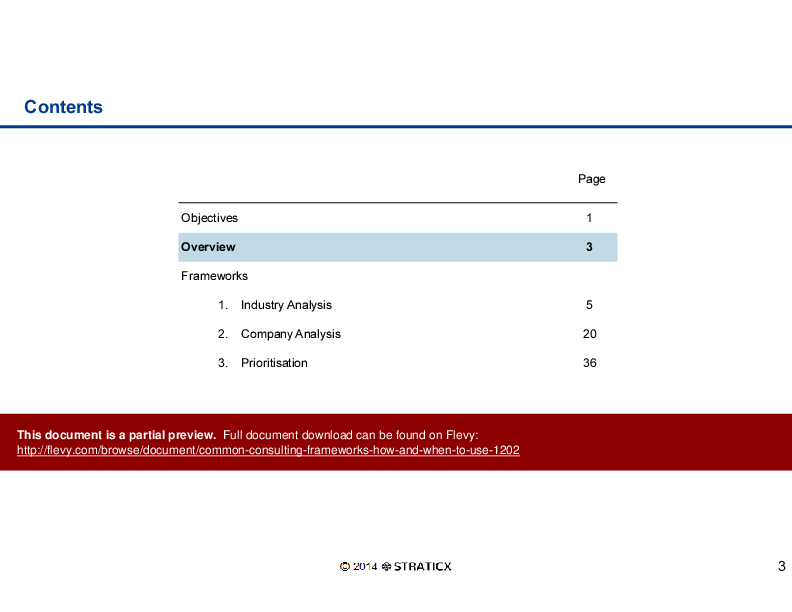
1. Industry Analysis
2. Company Analysis
3. Prioritisation
The objectives of this document are to:
Develop familiarity with common industry / business analysis frameworks
Generate an understanding of advantages / disadvantages of each framework
Provide a starting point for a reference library of commonly used frameworks
This document is equally suitable for those looking to move into consulting, consultants or those in corporate strategy roles.
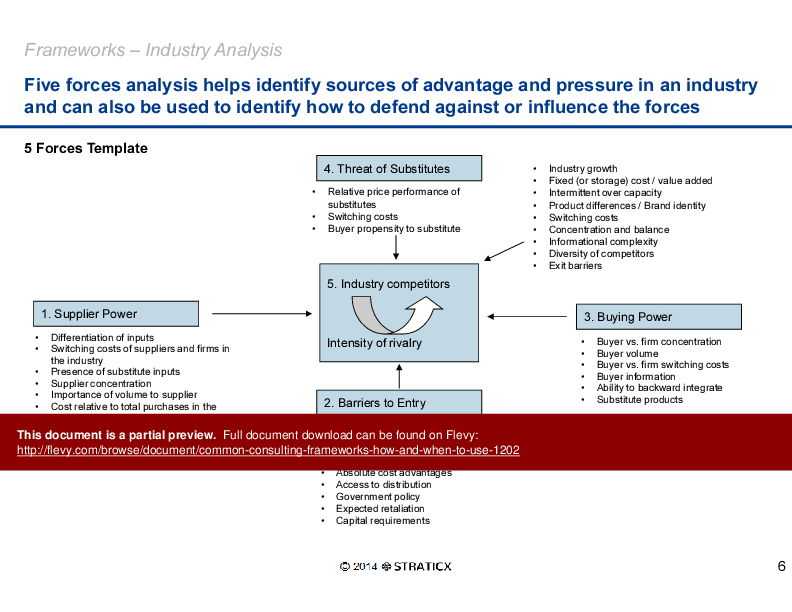
This PPT delves into the intricacies of industry analysis, utilizing frameworks like the Five Forces Analysis to pinpoint sources of competitive pressure and strategic advantage. It provides a comprehensive template to assess supplier power, threat of substitutes, and barriers to entry, among other factors. This analysis is crucial for understanding market dynamics and positioning your company to defend against competitive forces effectively.
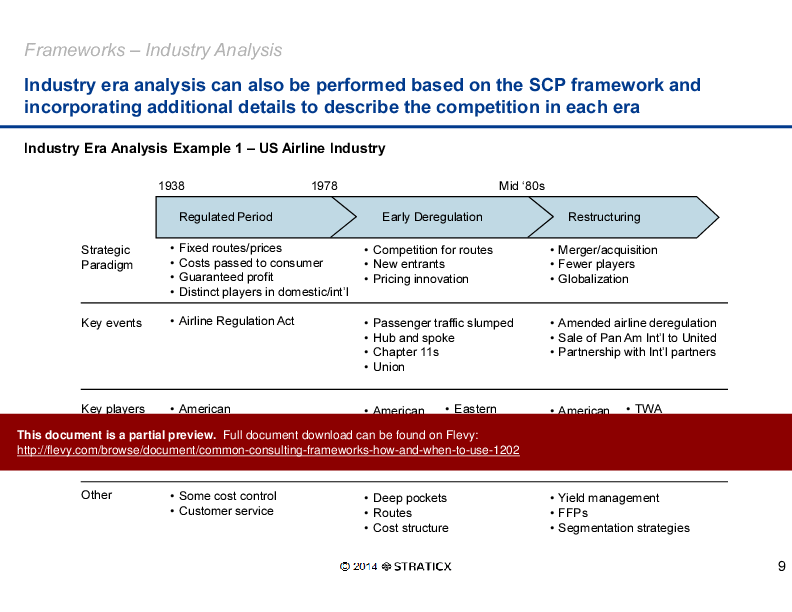
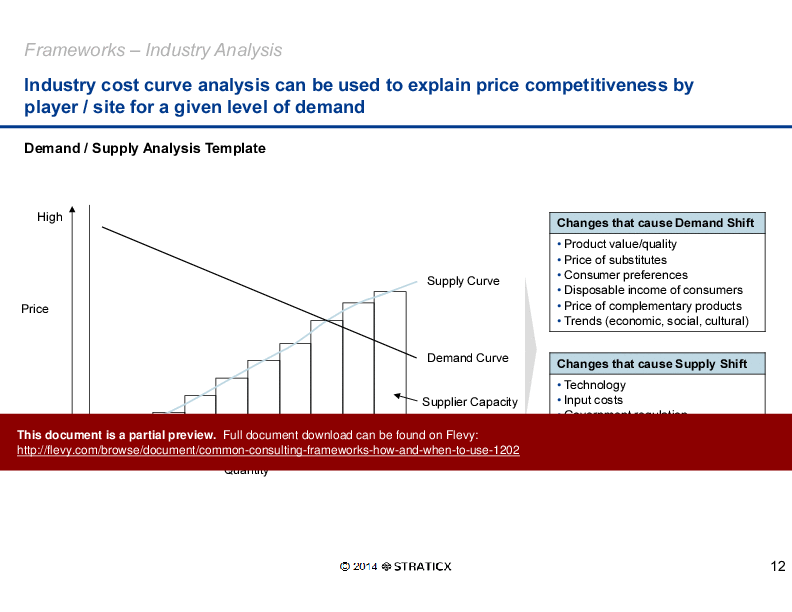
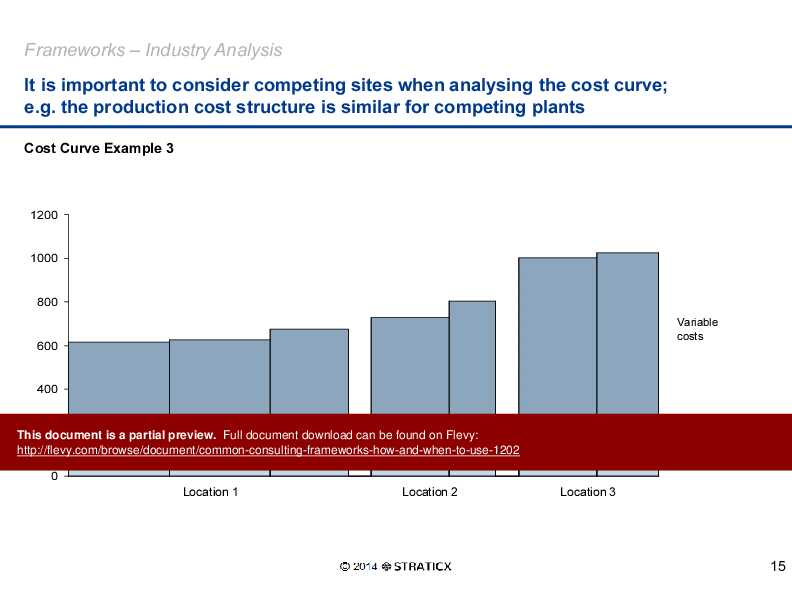
The document also explores the Industry Era Analysis, with a detailed case study on the US airline industry. It examines strategic paradigms, key events, and major players across different regulatory periods. This historical perspective is invaluable for understanding how industry shifts impact competitive strategies and market positioning over time. The inclusion of cost curve analysis further aids in explaining price competitiveness and production cost structures.
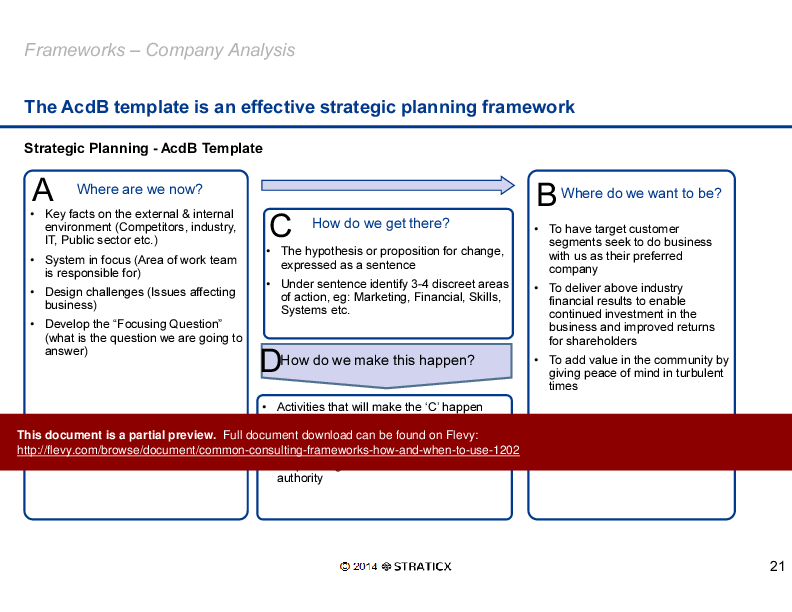
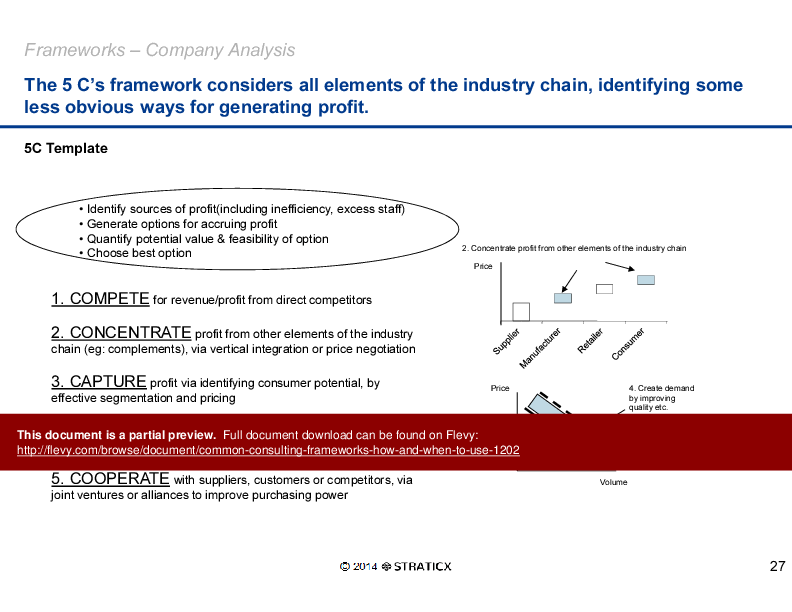
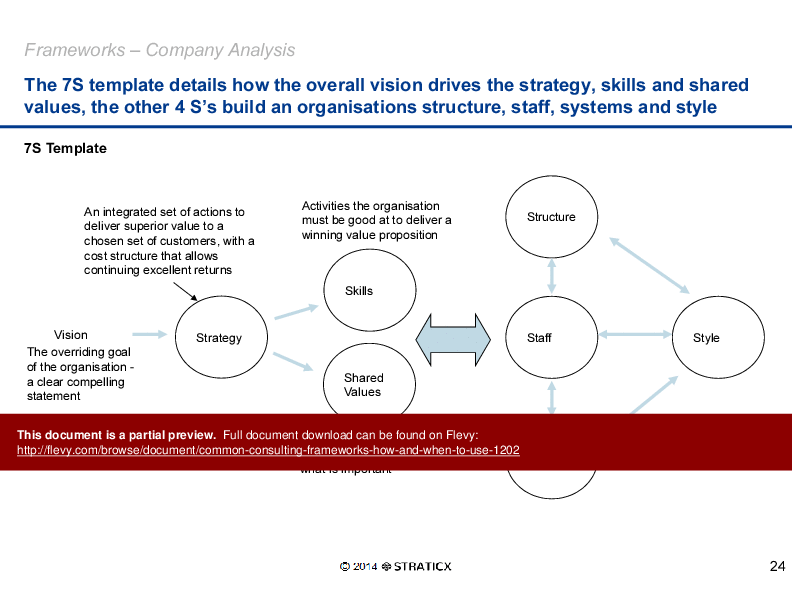
For company analysis, the document introduces frameworks like the AcdB template for strategic planning and the 7S template for organizational alignment. These tools help in defining current status, setting future goals, and devising actionable plans. The 5C's framework is particularly useful for identifying profit generation opportunities across the industry chain. Stakeholder analysis is also covered, providing insights into managing pressures from various constituents and leveraging degrees of freedom available to the company.
Got a question about the product? Email us at support@flevy.com or ask the author directly by using the "Ask the Author a Question" form. If you cannot view the preview above this document description, go here to view the large preview instead.
PRESENTATION DEEP DIVE ANALYSIS
This deep-dive analysis was generated from the full 43-slide PowerPoint presentation.
Executive Summary
This presentation titled "Common Consulting Frameworks (How and When to Use)" provides a detailed exploration of over 20 essential consulting frameworks for industry and company analysis, structured in a manner reflective of McKinsey, Bain, or BCG-quality presentations (consulting-grade; not affiliated). It equips corporate executives, integration leaders, and consultants with the tools necessary for strategic decision-making. Users will gain insights into various frameworks, their advantages and disadvantages, and practical applications for enhancing business analysis and strategic planning.
Who This Is For and When to Use
• Corporate executives seeking to enhance strategic decision-making capabilities.
• Integration leaders responsible for aligning business strategies across teams.
• Consultants aiming to provide structured analysis and recommendations.
• Business analysts looking to deepen their understanding of analytical frameworks.
Best-fit moments to use this deck:
• During strategic planning sessions to identify the most suitable frameworks for analysis.
• When conducting industry or company assessments to inform decision-making.
• In workshops aimed at enhancing team capabilities in strategic analysis.
Learning Objectives
• Define key consulting frameworks and their applications in business analysis.
• Analyze the advantages and disadvantages of each framework for informed decision-making.
• Develop familiarity with industry and company analysis methodologies.
• Generate actionable insights from framework applications to drive strategic initiatives.
• Establish a reference library of commonly used frameworks for ongoing use.
• Create tailored strategies based on framework insights to address specific business challenges.
Table of Contents
• Objectives (page 1)
• Overview (page 3)
• Frameworks
• Industry Analysis (page 5)
• Company Analysis (page 20)
• Prioritisation (page 36)
Primary Topics Covered
• Industry Analysis - A collection of frameworks designed to evaluate industry dynamics, including Five Forces, SCP, and Market Attractiveness.
• Company Analysis - Frameworks such as SWOT, 7S, and Value Chain that facilitate internal assessments and strategic planning.
• Prioritisation - Tools like the BCG Matrix and Directional Policy Matrix that assist in evaluating and prioritizing business units or projects.
Deliverables, Templates, and Tools
• Five Forces analysis template for assessing industry competition.
• SCP model to illustrate the relationship between industry structure, conduct, and performance.
• SWOT analysis template for identifying strengths, weaknesses, opportunities, and threats.
• 7S framework for evaluating organizational alignment and effectiveness.
• BCG Matrix for categorizing business units based on market share and growth potential.
• Directional Policy Matrix for prioritizing strategic initiatives based on market attractiveness and competitive position.
Slide Highlights
• Overview of the Five Forces framework, illustrating competitive pressures in an industry.
• SCP model slide detailing how industry structure influences conduct and performance.
• SWOT analysis example featuring Coca-Cola's strategic challenges and opportunities.
• 7S framework slide showcasing the interrelationship between strategy, structure, and culture.
• BCG Matrix slide categorizing business units into Stars, Cash Cows, Question Marks, and Dogs.
Potential Workshop Agenda
Introduction to Consulting Frameworks (30 minutes)
• Overview of the importance of consulting frameworks in strategic analysis.
• Discussion of key frameworks and their applications.
Framework Application Session (60 minutes)
• Breakout groups to apply selected frameworks to real-world business scenarios.
• Presentation of group findings and recommendations.
Framework Prioritization Workshop (45 minutes)
• Interactive session to prioritize frameworks based on organizational needs.
• Development of action plans for implementing selected frameworks.
Customization Guidance
• Tailor the framework examples to align with specific industry contexts or business challenges.
• Adjust the prioritization criteria based on organizational goals and resource availability.
• Incorporate company-specific data into the analysis templates for more relevant insights.
Secondary Topics Covered
• Market Attractiveness analysis and its impact on strategic positioning.
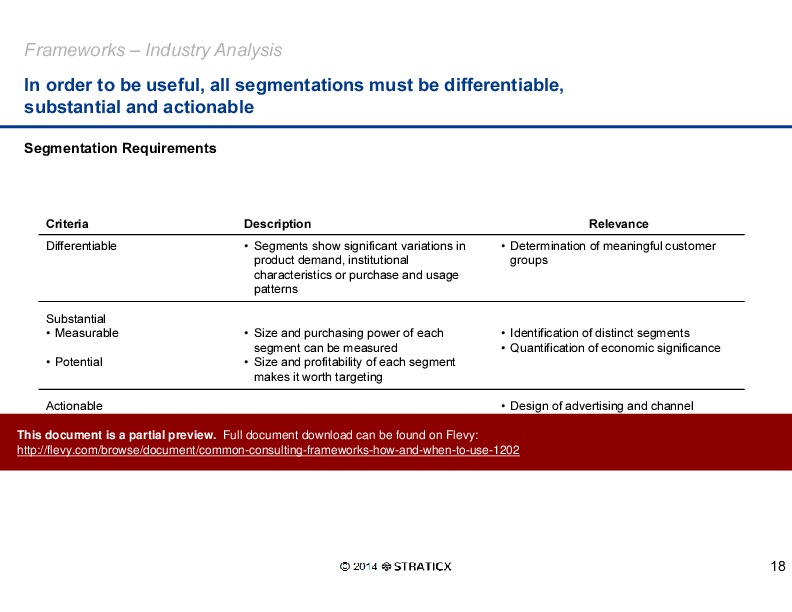
• Segmentation frameworks for identifying target markets and customer needs.
• Stakeholder analysis for understanding external pressures and influences.
• Product lifecycle considerations in strategic planning.
• Supply chain analysis for evaluating operational efficiencies.
Topic FAQ
What are the core frameworks I should learn for industry analysis and why are they used?
Core industry analysis frameworks include Five Forces for competitive pressure, the SCP (Structure‑Conduct‑Performance) model for linking industry structure to outcomes, Market Attractiveness assessments, Industry Era Analysis for historical shifts, and cost‑curve analysis for price competitiveness; the deck includes templates like a Five Forces template.How do company analysis frameworks like SWOT and 7S help different parts of an organization?
Company analysis frameworks target internal diagnosis: SWOT identifies strengths/weaknesses and external opportunities/threats, 7S evaluates alignment across strategy, structure and systems, Value Chain maps value-creating activities, and AcdB supports strategic planning; the presentation provides a 7S template.Which tools are commonly used to prioritise business units or projects in portfolio reviews?
Prioritisation typically uses the BCG Matrix to categorize units by market share and growth, and the Directional Policy Matrix to rank initiatives by market attractiveness versus competitive position; the presentation includes a BCG Matrix slide.What should I look for when choosing a frameworks deck for strategy work?
Key selection criteria are breadth of frameworks (industry, company, prioritisation), included templates (e.g., Five Forces, SWOT), practical examples or case studies, workshop agendas, and customization guidance to align with industry context; the product lists customization guidance and case examples.How do paid framework templates help compared with free online summaries when preparing client presentations?
Paid templates typically package structured slides, editable analysis templates, example case studies, and suggested workshop agendas to accelerate preparation; Flevy's Common Consulting Frameworks (How and When to Use) is offered as a 43-slide PPTX with templates and a sample workshop agenda.I need to run a half-day workshop to teach frameworks—what agenda structure can I use?
The product suggests a sample agenda: a 30-minute introduction to frameworks, a 60-minute application session with breakout groups applying selected frameworks, and a 45-minute prioritisation workshop to develop action plans—presented as a 30/60/45 minute sequence.Which framework is best for assessing supplier power and the threat of substitutes in a market?
Michael Porter’s Five Forces is the standard tool for assessing supplier power and threat of substitutes; the presentation includes a Five Forces analysis template and supporting slides on supplier power and barriers to entry.How can I adapt standard frameworks to examine long-term industry shifts like in airlines?
Use Industry Era Analysis to map regulatory periods, strategic paradigms, key events, and major players; combine with cost-curve analysis and historical case study material. The presentation includes an Industry Era Analysis case study on the US airline industry.Document FAQ
These are questions addressed within this presentation.
What are the key frameworks included in this presentation?
The presentation covers various frameworks, including Five Forces, SCP, SWOT, 7S, BCG Matrix, and Directional Policy Matrix, among others.
How can these frameworks be applied in practice?
These frameworks can be utilized for industry analysis, company assessments, strategic planning, and prioritization of initiatives.
What is the benefit of using consulting frameworks?
Consulting frameworks provide structured methodologies for analyzing complex business situations, facilitating informed decision-making.
Can the frameworks be customized for specific industries?
Yes, the frameworks can be tailored to fit the unique characteristics and challenges of different industries.
How do I choose the right framework for my analysis?
Consider the specific business challenge, the context of the analysis, and the strengths of each framework to determine the most appropriate choice.
Are there any examples of successful framework applications?
Yes, the presentation includes case studies and examples, such as Coca-Cola's SWOT analysis, illustrating practical applications.
What resources are available for further learning?
The presentation serves as a starting point for a reference library of commonly used frameworks, with additional resources available upon request.
How can I ensure effective implementation of these frameworks?
Engage stakeholders, customize the frameworks to fit your organization's needs, and develop clear action plans for implementation.
Glossary
• Five Forces - A framework for analyzing industry competition and dynamics.
• SCP Model - Structure-Conduct-Performance model illustrating industry relationships.
• SWOT - A strategic planning tool for identifying strengths, weaknesses, opportunities, and threats.
• 7S Framework - A model for evaluating organizational alignment across 7 elements.
• BCG Matrix - A tool for categorizing business units based on market share and growth potential.
• Directional Policy Matrix - A framework for prioritizing business segments based on attractiveness and competitive position.
• Market Attractiveness - Factors influencing the desirability of an industry for investment.
• Segmentation - The process of dividing a market into distinct groups for targeted strategies.
• Stakeholder Analysis - An assessment of the influence and impact of various stakeholders on a business.
• Product Lifecycle - The stages a product goes through from introduction to decline.
• Supply Chain Analysis - An evaluation of the flow of goods and services from suppliers to customers.
• Value Chain - A model for analyzing the specific activities through which firms create value.
STRATEGY FRAMEWORKS PPT TEMPLATES
Source: Best Practices in Strategy Frameworks, Consulting Training, Company Analysis, Bain PowerPoint PowerPoint Slides: Common Consulting Frameworks (How and When to Use) PowerPoint (PPTX) Presentation Slide Deck, STRATICX




























